
Telling a story with paper
No cutscenes, no narrator. Sixteen documents, scattered through a school, and a journal to keep them in.
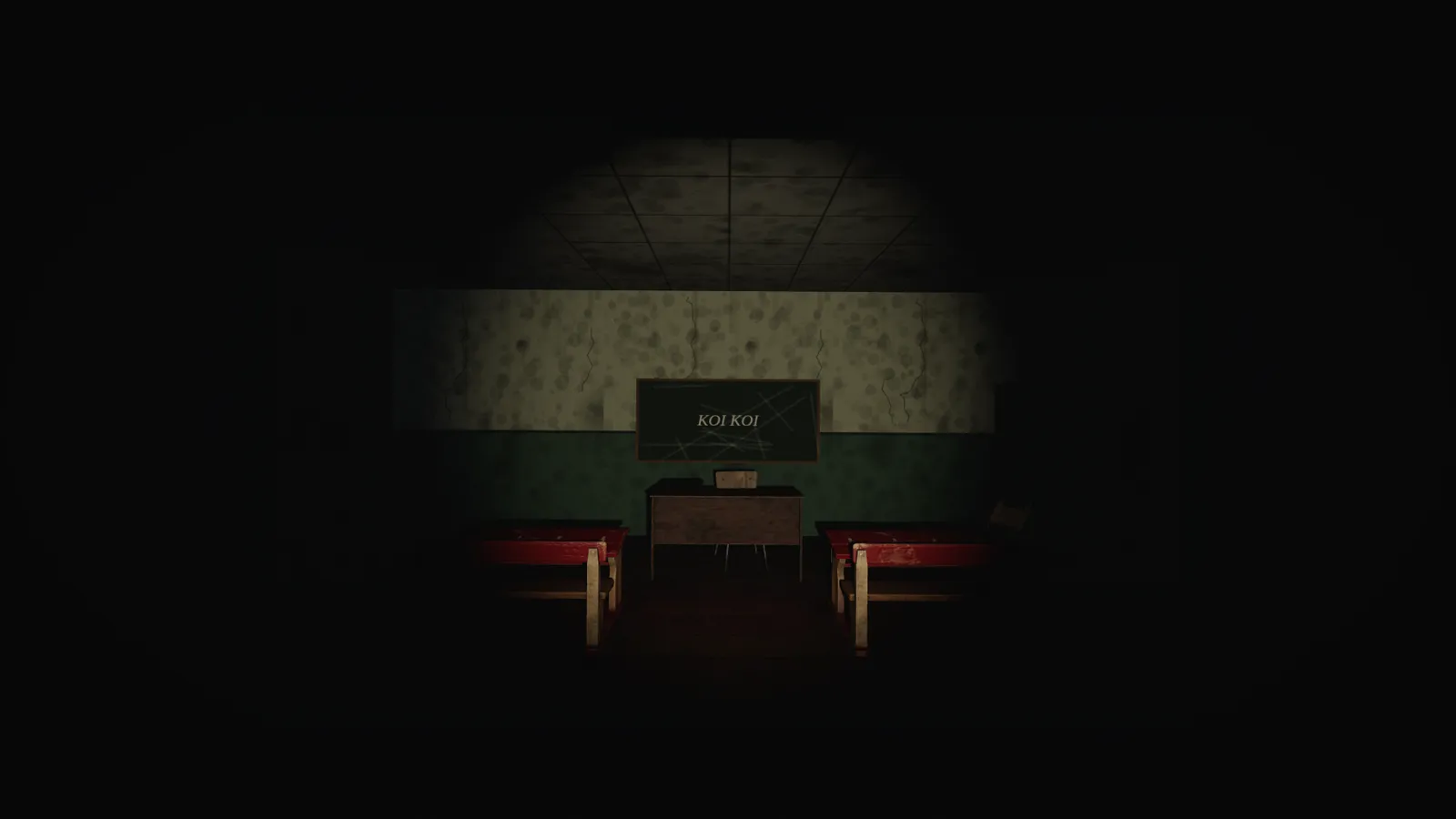
Madam Koi Koi tells its story almost entirely through things you find: letters, memos, registers, a newspaper clipping, a draft statement to the police. Each one goes into your journal, and you can read them again whenever you like.
Every document is a point of view
The school's papers don't agree with each other, and that's the point. The Vice Principal writes about noise complaints. The punishment book is signed with initials. The sick bay register records boys who can't sleep. A draft statement has lines scribbled out so hard the pen has torn through. You put the truth together from what each of them chose to write down, and what they left out.
WHO WILL STOP HER?
That line is written in the margin of the punishment book, in different handwriting, pressed hard. It's three words, and it changes how you read the whole page.
You need all of it
The gate won't open until you've found every piece of evidence. We went back and forth on that. In the end it made the game better: you can't sprint for the exit, you have to search the school, and by the time you leave you know what happened there.
Writing for the dark
Every document is short. You're reading by flashlight with a battery running down and heels somewhere down the corridor, so no page is longer than it needs to be. Most are under a hundred words.